
Paris Vintage: The Ultimate Connoisseur's Guide
From Le Marais to Saint-Ouen: a connoisseur's tour of Paris's finest vintage boutiques, markets, and hidden gems. Where to find Dior, Hermès, and YSL — at accessible prices.

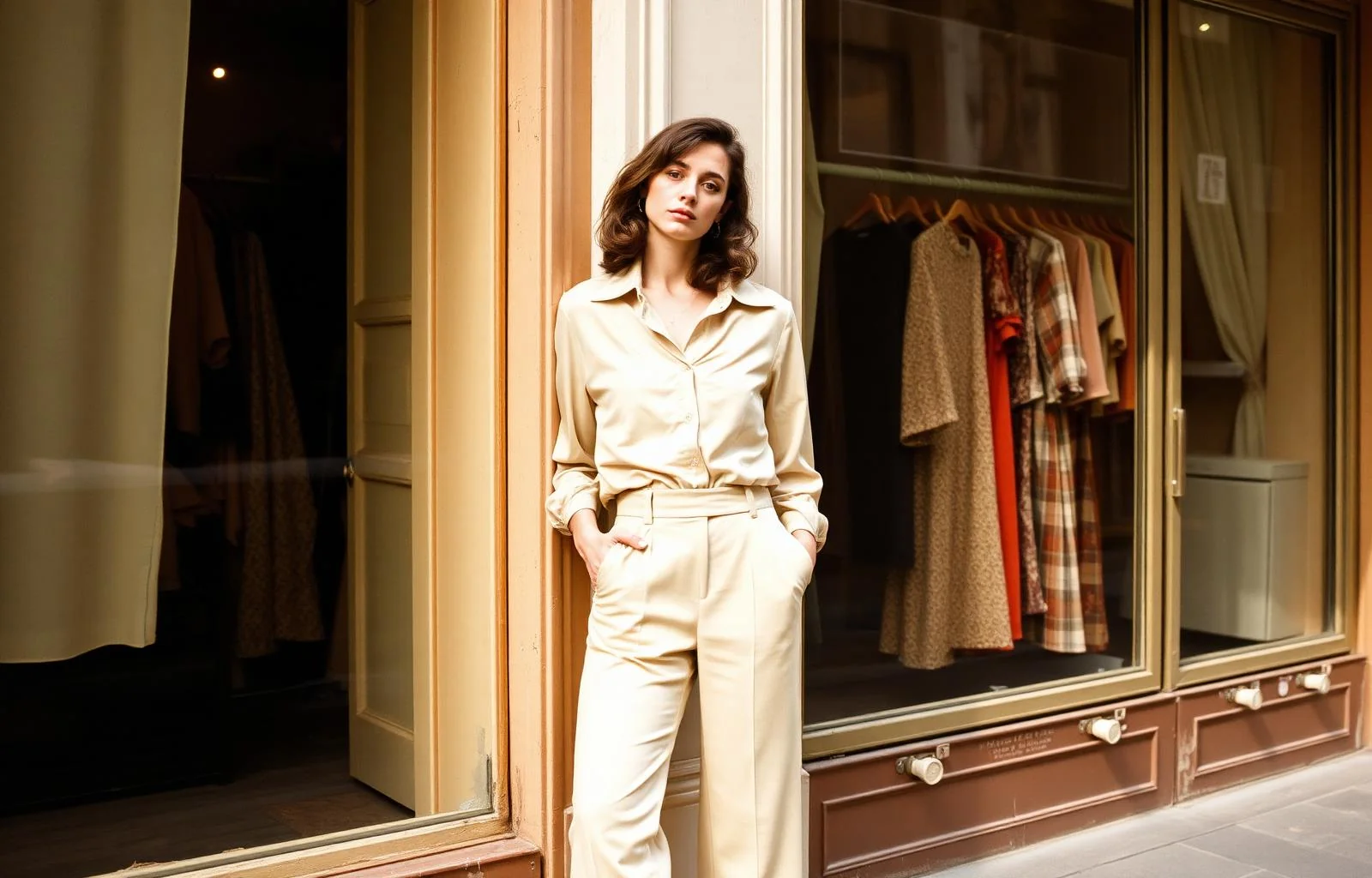
Paris isn't just the birthplace of haute couture — it's where fashion goes to live a second life. The city's relationship with clothing is almost spiritual: garments are cherished, repaired, and passed down. This reverence makes Paris arguably the world's greatest vintage hunting ground. From the gilded halls of Saint-Germain-des-Prés to the bohemian corners of Belleville, every arrondissement tells a different story through its second-hand shops.
What distinguishes Parisian vintage from, say, London or New York, is an almost academic approach to curation. Parisian shop owners are archivists as much as they are merchants. You'll find pieces organized not just by era but by designer, fabric, and silhouette. A 1970s Yves Saint Laurent peasant blouse sits next to a 1990s Martin Margiela deconstructed jacket — not as random finds, but as part of a deliberate narrative about French fashion history.
The Districts
Le Marais (3e & 4e) is ground zero for premium vintage. Free'P'Star (52 Rue de la Verrerie) is the entry point — chaotic, affordable, and beloved by students and stylists alike. For a more elevated experience, Kilo Shop (69-71 Rue de la Verrerie) operates on the iconic weight-based pricing model that originated here. Further along, Thanx God I'm a V.I.P. (12 Rue de Lancry, 10e) has expanded from its original Saint-Martin location — Yusuke Takahashi's color-coded curation method transforms vintage shopping into an almost meditative experience.
Saint-Germain-des-Prés (6e) is where serious collectors go. Didier Ludot (24 Galerie de Montpensier) is a museum disguised as a boutique — his collection of little black dresses spans a century of design. Prices are museum-caliber too, but merely stepping inside is an education. Nearby, Catherine B (1 Rue de l'Abbaye) specializes in 1920s–1940s pieces that belong in a Jean Renoir film.
Montmartre & Pigalle (18e) offer a different rhythm entirely. Chine Machine (100 Rue des Martyrs) and By Flowers (84 Rue des Martyrs) form the spine of a vintage corridor where 1980s Italian leather jackets and 1970s French workwear coexist at accessible prices. Rue des Martyrs is arguably the best single street in Paris for vintage shopping — start at the bottom and work your way up.
The Markets
Marché aux Puces de Saint-Ouen is not to be missed, though it requires strategy. Spanning 14 sub-markets across 7 hectares, it's the largest antique and vintage market in the world. For clothing specifically, head to Marché Vernaison (for early 20th-century textiles) and Marché Dauphine (for mid-century fashion and accessories). Go early on Saturday, bring cash, and don't be afraid to negotiate — it's expected.
Marché d'Aligre (12e, Tuesday–Sunday mornings) is smaller but more intimate. The clothing section is modest, but the surrounding neighborhood of cafés and bakeries makes it a perfect Sunday morning ritual. You might find a 1960s Hermès scarf among kitchen linens — these are the accidents that make Paris magical.
Practical Notes
Most Parisian vintage shops are closed on Sundays and Mondays — plan accordingly. While credit cards are widely accepted in established boutiques, markets and smaller shops prefer cash. The European sizing system means a French 38 is a US 6 and a UK 10; when in doubt, try on. And perhaps most importantly: Parisian shopkeepers value courtesy. A genuine "Bonjour" upon entering — even if your French stops there — opens doors.
Why Paris Matters
Paris teaches us that vintage isn't about nostalgia — it's about connoisseurship. Each piece carries the DNA of the city that invented the very concept of fashion. When you buy vintage in Paris, you're not just acquiring a garment; you're participating in a tradition that stretches back to the cabinets of curiosities of the 18th century, through the department stores of the Belle Époque, and into the ateliers of the 20th century's greatest designers. In a world of algorithmic sameness, Parisian vintage is an act of resistance — and an education in taste.